
If you’ve ever sat down for a meal at a Vietnamese restaurant, you likely noticed one thing immediately: the incredible variety of greens on the table. Whether raw, stir-fried, braised, pickled, or salted, Vietnamese vegetables are woven into every single meal.
It’s rare to find a dish that doesn’t include at least a few vegetables. Beyond the main course, a typical family meal often features a vegetable side dish, a fresh salad, a plate of pickles, or a basket of leaves for wrapping. The golden rule of Vietnamese eating is simple: balance. A proper meal must harmonize protein, starch, and plenty of fresh vegetables.
In our guide, I’m sharing a comprehensive list of essential Vietnamese vegetables—complete with names, taste profiles, and textures. You’ll also learn how to confidently shop for and incorporate these ingredients into your next recipe.
Table of Contents
ToggleWhy Vietnamese Vegetables Are Essential in the Vietnamese Diet
Vietnamese vegetables are fresh, diverse, and nutritious, making up a significant portion of the nation’s diet. Vietnam is also a leading world consumer of vegetables, with each inhabitant consuming an average of 183 kilograms per year. This large consumption is supported by the country’s tropical climate, which allows the nation to produce fresh vegetables throughout the year. ( Year-Round Vegetable Production ).
The nutritional value of Vietnamese vegetables, such as leafy greens, tubers, and herbs, contributes significantly to maintaining a healthy diet. Rich in vitamins, antioxidants, and fibre, these vegetables support immune health, improve digestion, and help prevent chronic diseases. The diversity of vegetables grown in Vietnam offers a wide range of options to enhance daily meals, making them a staple and a vital part of a balanced, health-conscious lifestyle.
Explore Key Vietnamese Vegetables: A Complete List with Pictures
Rau Muống (Water Spinach/Morning Glory)
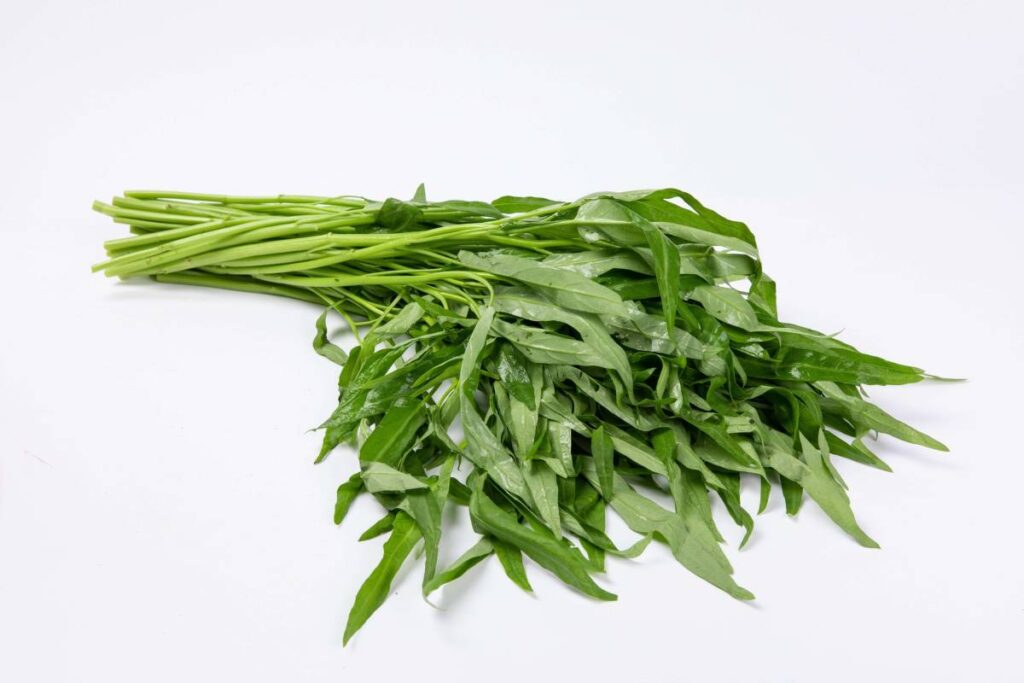
Taste and Appearance
Features arrow-shaped leaves and hollow stems with a mild, spinach-like flavor. Stems stay crunchy when cooked while leaves become tender quickly.
Common Preparations and use
- Raw in salads – Hollow stems eaten fresh, often curled or trimmed for texture
- Soups and stews – Added to pho and other broths (leaves added last)
Nutritional Benefits
Rich in vitamins A, C, K, iron, calcium, and potassium. Low-calorie with high water content and fiber, supporting eye health and immune function.
Mustard Greens ( Rau Cải )
Taste and Appearance
Broad, dark green leaves with thick stems. They offer a distinctively spicy, peppery kick and mild bitterness that softens significantly when cooked.
Common Preparations
- Pickled: Fermented into Cải Chua, providing a tangy crunch that cuts through fatty meats.
- Soups: Cooked with ginger and fish to balance the “cooling” nature of the greens.
Nutritional Benefits
A powerhouse of antioxidants and fiber. It is particularly high in Vitamin K and Vitamin C, which may support heart health and immunity. (Link to authority source on Mustard Greens nutrition).
Vietnamese Bitter Melon – ( Khổ qua )
Taste and Appearance
A bumpy, pale green fruit-vegetable resembling a warty cucumber. It is famous for its distinctively bitter flavor, which is acquired but deeply beloved. The texture is crunchy like a green pepper when raw, softening to a squash-like texture when cooked.
Common Preparations:
- Stuffed Soup (Canh Khổ Qua): Whole melons hollowed out and stuffed with seasoned ground pork and wood ear mushrooms. A must-have for Lunar New Year (Tet) to symbolize “letting hardships pass.”
- Stir-fry: Sliced thinly and stir-fried with eggs (Khổ qua xào trứng) to balance the bitterness.
Nutritional Benefits
Famed in traditional medicine for regulating blood sugar and cooling the body. Rich in Vitamin C and antioxidants. [Source: Healthline]
Katuk / Sweet Leaf (Rau Ngót)
Scientific Name: Sauropus androgynus (often called Tropical Asparagus or Star Gooseberry).
Taste & Appearance
Small, oval-shaped dark green leaves on woody stems. The texture is firm and slightly dense compared to spinach. It has a unique nutty, sweet flavor often described as similar to fresh garden peas or asparagus.
Common Preparations:
Sweet Leaf Soup (Canh Rau Ngót): The most classic preparation. The leaves must be crushed by hand (scrunching them) before cooking to soften the fibers and release their natural sweetness. It is typically cooked with ground pork or dried shrimp.
Nutritional Benefits:
Exceptionally high in protein, Vitamin A, and Vitamin C. Traditionally eaten by new mothers to improve lactation and recovery. [Source: Healthline – linked to general greens benefit]
Luffa Squash / Sponge Gourd (Mướp)
Taste & Appearance
A tropical vine fruit harvested young, featuring a cylindrical shape with slightly rough green skin. It offers a mild, fresh flavor that acts as a flavor sponge, absorbing seasonings perfectly. When cooked, the white flesh turns silky and soft, adding a delicate sweetness to the dish.
Common Preparations
Stir-fry: (Mướp xào) – Sautéed with garlic, glass noodles, or chicken giblets (lòng gà) for a textural contrast.
Soups: (Canh mướp) – Boiled briefly with dried shrimp or pork to create a refreshing, sweet broth.
Nutritional Benefits
Low in calories but rich in dietary fiber, Vitamin A, B, and C. It supports digestion and immune health while being hydrating.
Cassava (Khoai Mì)
Taste and Appearance
A long, starchy root with rough, bark-like brown skin and stark white flesh. It has a mild, slightly nutty sweetness and a dense, chewy texture when cooked. It is incredibly versatile, bridging the gap between a savory vegetable and a dessert ingredient.
Common Preparations
- Desserts: The star ingredient in Bánh Khoai Mì Nướng (baked cassava cake) and Bánh Tằm Khoai Mì (steamed silkworm-shaped cakes with coconut).
- Steamed: Simply steamed with coconut milk (Khoai mì hấp nước cốt dừa) as a rustic, comforting snack.
Nutritional Benefits
An excellent source of energy-rich carbohydrates and Vitamin C. Note: Cassava must always be cooked thoroughly to neutralize naturally occurring toxins. [Source: Healthline]
Bamboo Shoots (Măng)
Taste & Appearance
Young sprouts of the bamboo plant. In Vietnam, they appear in two main forms: Fresh (Măng Tươi) which is crisp, yellow, and mildly sweet; and Dried (Măng Khô), which is amber-colored with a chewy, meaty texture and intense earthy aroma.
Common Preparations
- Duck Noodle Soup (Bún Măng Vịt): The most famous pairing. Dried bamboo shoots soak up the rich duck fat in the broth.
- Braised Pork (Thịt Kho Măng): Fresh or dried bamboo stewed with pork belly until tender.
Nutritional Benefits
High in fiber, copper, and Vitamins B6 and E. Important: Fresh bamboo must always be boiled thoroughly before cooking to remove natural bitterness and toxins. [Source: Healthline]
Eggplant (Cà Tím)
Taste and Appearance
Long, slender, and vibrant purple-green (unlike the large globe varieties in the West). These “fruit-vegetables” have a sweet, mild flavor with very little bitterness. Their sponge-like flesh is perfect for soaking up savory sauces and spices.
Common Preparations
- Grilled: (Cà tím nướng mỡ hành) – Roasted until smoky and soft, peeled, and topped with scallion oil and fish sauce.
- Braised/Stewed: Simmered in clay pots with pork belly or tofu, or added to curries (Cà ri) for texture.
Nutritional Benefits
Seen as a “cooling” food in traditional medicine. Rich in fiber, antioxidants (nasunin), and manganese for bone health.
Bok Choy (Cải Thìa)
Taste and Appearance
A perennial leafy cabbage popular throughout Southeast Asia. It features juicy, crunchy white ribbed stems and succulent, dark-green leaves. The flavor is fresh, mild, and slightly sweet.
Common Preparations
- Stir-fry: Cooked quickly with garlic or shiitake mushrooms. Tip: Cook stems first as they take longer than the leaves.
- Raw/Salad: Tender young stems can be eaten raw with dipping sauce or sliced into table salads.
- Soups: Added to noodle soups at the last minute to retain crunch.
Nutritional Benefits
High water content makes it hydrating. A rich source of Vitamin A, C, and K, plus calcium for bone health. [Source: Medical News Today]
Taro (Khoai Môn)
Taste and Appearance
A starchy root vegetable with brown, hairy skin and white flesh speckled with purple. It has a mild, slightly sweet, and nutty flavor (similar to sweet potato but earthier) that works in both savory and sweet dishes.
Common Preparations
- Soups: (Canh khoai môn) – Simmered with pork ribs until soft and creamy.
- Desserts: (Chè khoai môn) – Cooked with sticky rice and coconut milk for a rich pudding.
- Fillings: Mashed or diced for savory spring rolls (Chả giò).
Nutritional Benefits
Traditionally valued for its nourishing qualities. It is high in fiber, potassium, and resistant starch, which aids blood sugar management.